
About this course
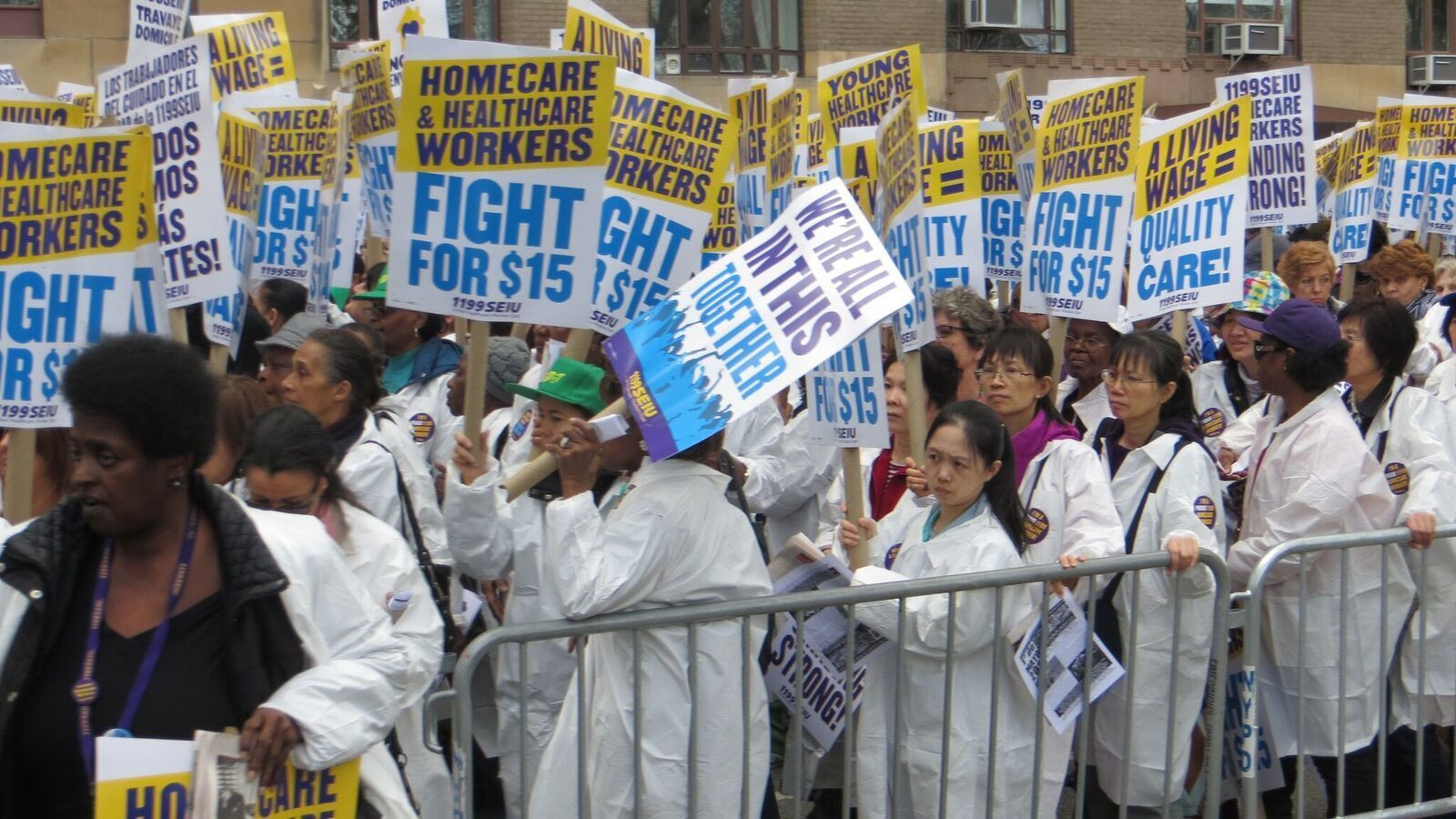
This course focuses global wage trends and discusses the particularities and strategies of collective bargaining and minimum wages as wage setting mechanisms. It presents global trends and analyses the relationship between wages and economic development, as well as the impact of migration, gender and racial discrimination on wages policies. Finally, the course analyses successful experiences and labour campaigns that resulted in better working and living conditions, and ongoing initiatives for living wages.
This course was first launched in 2017.
Key concepts
wage trends, economic decelopment, collective bargaining, minimum wages, wage setting mechanisms, migration, gender, racial discrimination, labour campaigns
Course structure
Chapter I: Introduction to the Course
Chapter II: Political Economy of Wages
Chapter III: The Role of Collective Bargaining
Chapter IV: Minimum and Living Wages
Chapter V: Macroeconomics of Wages
Chapter VI: Wage Setting in an Unfair World
Chapter VII: Workers’ Strategies and Campaigns for Minimum Wages, Collective Bargaining and Decent Wages
Course materials and workload
This course has 6 content chapters. The chapter contains a series of units; each unit is composed of one video lecture, two quiz questions, a reflection question, a key reading, as well as additional reading materials. All these can be downloaded and used offline.
The estimated workload for each chapter, including key readings, is around 6 hours.
Course contributors
Jane Barrett, Director of Organization and Representation of WIEGO
Juneia Batista, Director of Organization and Representation, Women in Informal Employment – WIEGO, South Africa
Prof Dr Mary Bellman, Professor of Labour and Employment Relations, Penn State University, U.S.
Dr. Patrick Belser, Senior Economist, International Labour Organization
Dr. Janine Berg, Senior Economist, International Labour Organization
Ruth Castel-Branco, PhD candidate, University of the Witwatersrand, South Africa
Dr. Luis Campos, Director of the Observatory of Social Rights, Workers’ Central Union (CTA - Autónoma), Argentina
Neil Coleman (Strategies Co-ordinator, Congress of South African Trade Unions (COSATU), South Africa)
Vagner Freitas, President, Trade Union Confederation – CUT, Brazil
Susan Hayter, Senior Labour Relations Specialist, International Labour Organization
Prof. Dr. Hansjörg Herr, Professor Emeritus, Berlin School of Economics and Law Germany
Dr. Frank Hoffer, Executive Director of ACT Foundation
Jenny Holdcroft, Assistant General Secretary, IndustriALL
Ronald Janssen, Economic policy adviser, Trade Union Advisory Committee to the OECD - TUAC
Prof. Dr. Praveen Jha, Professor of Economics, Jawaharlal Nehru University, India
Bandile Ngidi, Rural Transformation Project Officer, Oxfam, South Africa
Prof. Dr. Archana Prasad (Professor at the Centre for Informal Sector and Labour Studies, School of Social Sciences of Jawaharlal Nehru University, India)
Dr. Uma Rani, Senior Development Economist, International Labour Organization
Ashim Roy, Vice-President of the New Trade Union Initiative - NTUI, India
Prof. Dr. Carlos Salas, Professor of Economic Theory and Gender Studies, University of Campinas, Brazil
Dr. Thorsten Schulte (Institute of Economic and Social Research – Hans Bockler Foundation)