
About this course
How widespread is informal employment? What are the forces driving it and what are power relations sustaining it? Why is it important to speak of worker power?
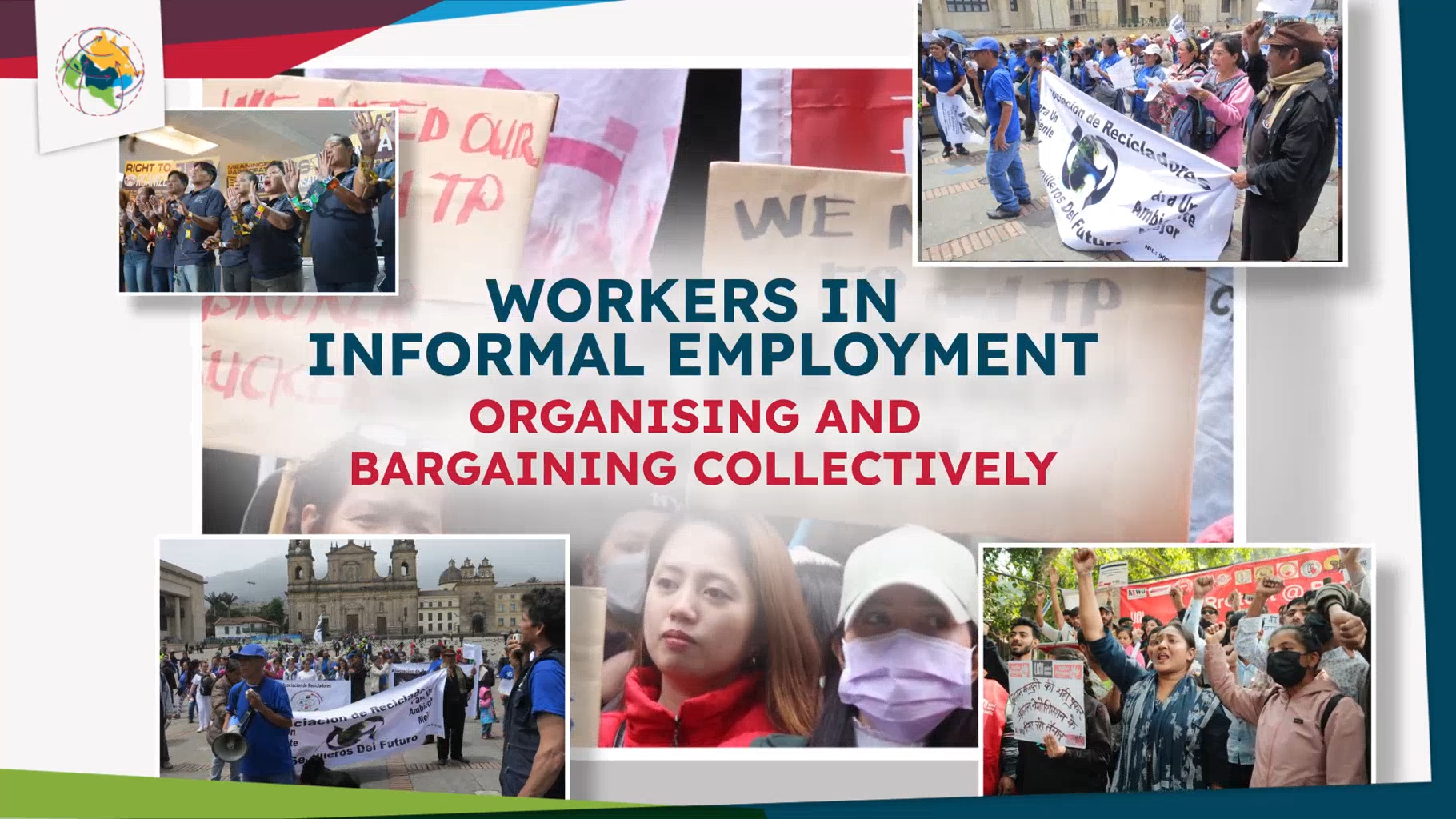
This course offers a platform to analyse and discuss the political economy of informal employment, including the main forces and actors behind it. The focus is on worker collective power and specifically on strategies for collective organising and bargaining in spaces where worker rights are commonly denied.
This course was first launched in 2026.
Key concepts
informal employment, informalisation of work, political economy of labour, key drivers of informality, precarity, collective representation, worker collective power, and collective organising and bargaining.
Course structure
Chapter I: Course Introduction
Chapter II: Organising and Bargaining Against All Odds: Stories of Collective Resistance (I)
Chapter III: The Political Economy of Informal Employment: Unmasking its Driving Forces
Chapter IV: Workers Collective Power: Collective Representation and Bargaining
Chapter V: Organising and Bargaining Against All Odds: Stories of Collective Resistance (II)
Course materials and workload
This course has 4 content chapters. The chapter contains a series of units; each unit is composed of one video lecture, two quiz questions, a reflection question, a key reading, as well as additional reading materials. All these can be downloaded and used offline. Zoom workshops with the course contributors provide a space to dive deeper into the topic (wherever available, these are located under the video lecture).
The estimated workload for each chapter, including key readings, is around 8 hours.
Course contributors
Oksana Abboud, International Organizer, StreetNet International
Shalith Shamilana Bandara Athurupana, Critical Care Nursing Officer and National Youth Coordinator, Public Services United Nurses Union (PSUNU), Sri Lanka
Dr. Martha Chen, Lecturer in Public Policy, Harvard Kennedy School, and Affiliated Professor, WIEGO, USA
Nitesh Kumar Das, Program Officer, Center for Workers' Solidarity (CWS), India
Pat Horn, Collective Bargaining Specialist, WIEGO, and Founder of StreetNet International, South Africa
Md Sabbir Hossain, Labour Lawyer and Development Professional, Bangladesh
Kate Lappin, Asia Pacific Regional Secretary, Public Services International (PSI)
Faisal Makruf, General Chairperson, Federasi Serikat Merdeka Sejahtera (F-SEMESTA)
Asad Mehmood, Director of Programs and Research, Labor Education Foundation, Pakistan
Karin Pape, Women in Informal Employment Globalizing and Organizing (WIEGO)
Gene Rodriguez, Regional Coordinator, International Federation of Workers' Education Associations (IFWEA)
Prof. Melisa Serrano, School of Labor and Industrial Relations, University of the Philippines, Philippines
Ms. Leelavathi Subramani, National Coordinator, Women’s Wing, Indian National Trade Union Congress (INTUC), India
J. Wambui Wamai, Organizing and Education Secretary, Kenya National Union of Domestic Workers (KUDHEIHA), Kenya
Dr. Edlira Xhafa, Executive Director, Global Labour University Online Academy